
A Look at Thermally Modified Wood vs. Fiber Cement vs. Vinyl Siding
Exterior siding has two important jobs: protect the building and help define its character, or curb appeal. But that's only part of the story. Architects and builders are also balancing design intent with moisture management, fire requirements, labor availability, maintenance expectations, sustainability goals, and the owner's long-term budget.
Thermally modified wood, fiber cement, and vinyl are frequently considered for the same residential and light-commercial projects, but they address those needs in very different ways. One is natural wood enhanced through heat and steam. Another is a dense cementitious composite. The other is a lightweight polymer system. Each brings legitimate strengths, and each has certain trade-offs.
As we explore these materials in greater detail, there is no universally best siding, and the right choice depends on the project.
Material Approaches
Vinyl is lightweight, easy to install, and requires almost nothing of the owner beyond a wash. It does not rot or absorb water. However, the polymer expands and contracts significantly with temperature, so it has to be fastened loosely enough to float rather than be pinned to the wall. Vinyl is the right answer when cost is a concern, and the design intent does not ask the siding to carry it through.

Fiber cement, a semi-rigid material made from cement, sand, water, and cellulose (wood) fibers, offers two things wood and vinyl cannot: a noncombustible material and a uniform painted surface across large elevations. It is dimensionally stable, rot-resistant, and durable. Costs are typically incurred on the jobsite and over time. Because the finish is paint, a localized repair often requires repainting an entire section to maintain consistency. Because it is a heavy material, it can slow staging, especially at higher elevations and on larger walls. An important consideration for installation is that construction crews must comply with OSHA's silica standard for construction, including dust collection and controls, because the material releases respirable crystalline silica.

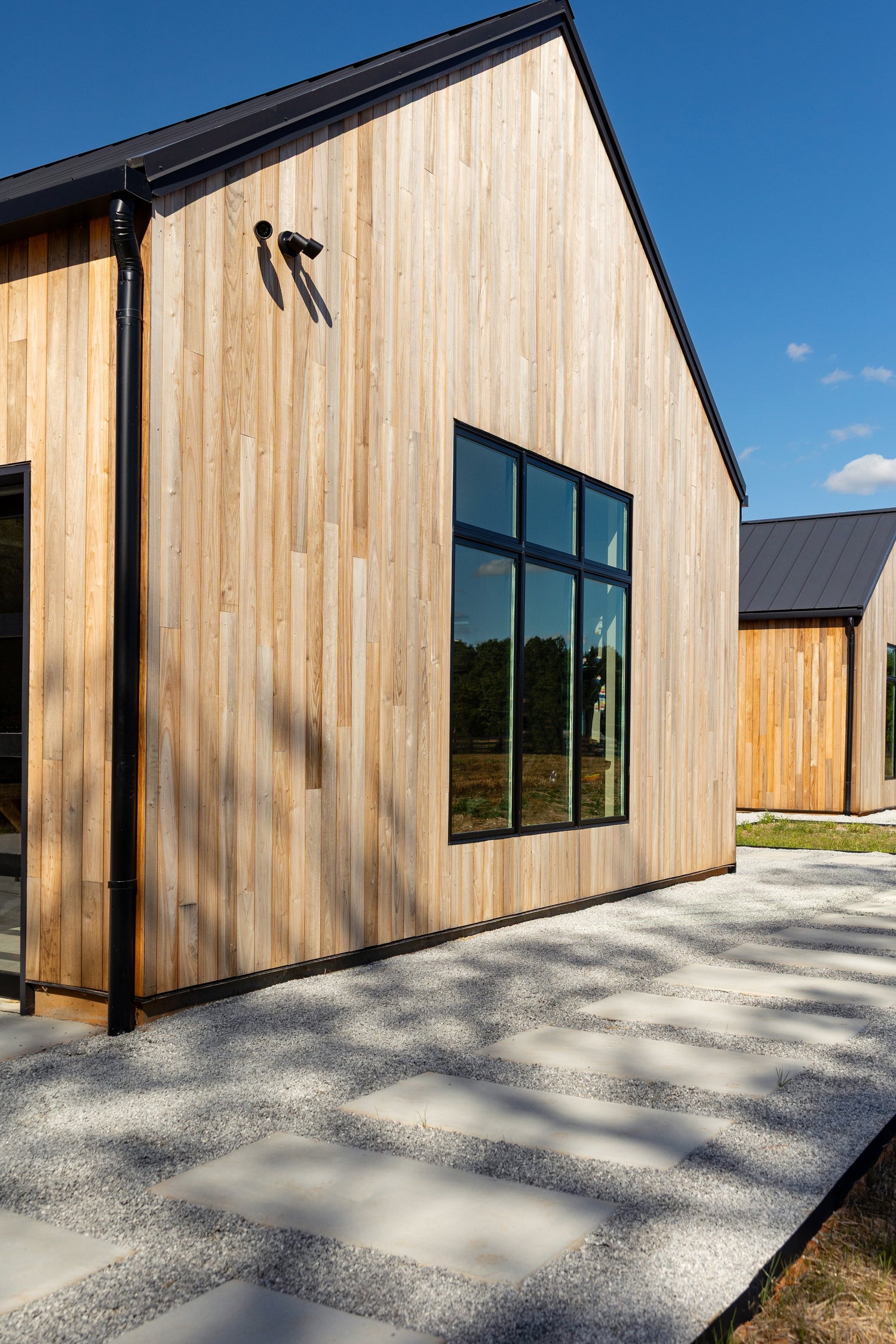
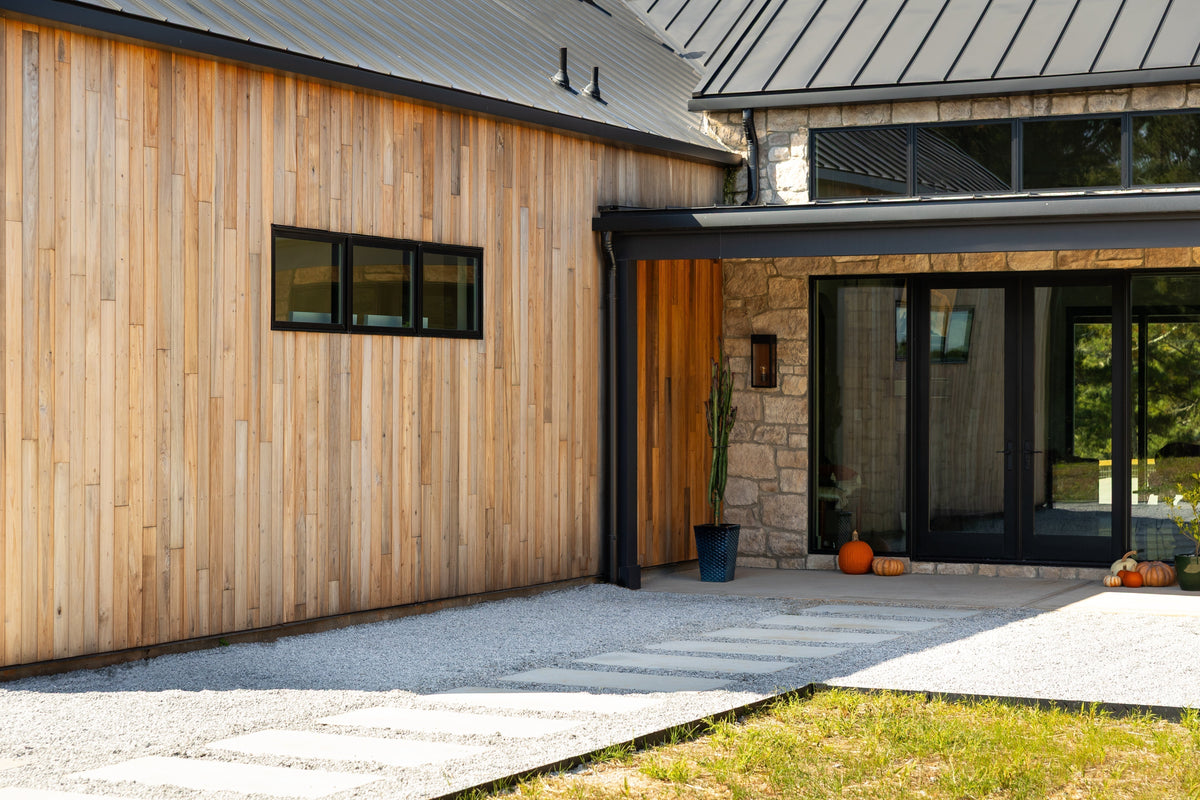
Thermally modified wood combines heat and steam to transform the wood, so it takes on far less moisture, improving dimensional stability and decay resistance compared with untreated lumber. No chemicals or preservatives are used, and you get authentic grain, board-to-board variation, and a surface you can hold at its original tone with a UV oil or let weather to silver-gray. The trade-offs are real. The same process that stabilizes the wood can also make it more brittle, so it requires sharp carbide blades, correct edge distances, and predrilling where the manufacturer calls for it. Thermally modified wood is available in a range of species options that vary the grain and tone from pronounced to quiet.
Differentiating Factors
A premium cladding cannot rescue a bad wall.
Long-term performance starts behind the cladding with proper drainage, flashing, ventilation, fastening, and transitions around windows and penetrations. These factors determine how a wall ages. No siding material on the market can fix a poorly detailed wall.
The comparison is not simply about how fast siding can be installed. It also reflects the type of craftsmanship the design requires. Thermally modified wood products offer the field adaptability of wood. Fiber cement delivers a consistent modular system. Vinyl prioritizes ease of handling and installation.
Installation remains the same for any wood product that requires acclimatization, appropriate clearances, flashing, and a ventilated rainscreen approach. Westwood Millworks calls for a minimum 3/4-inch air gap behind the siding, appropriate furring, and installation details that allow drainage and airflow.
Fiber cement holds moisture at cut edges and joints; water-resistive barriers, flashing, clearances, joints, and manufacturer installation instructions are critical.
Since vinyl expands and contracts with temperature changes, making accurate installation essential. Vinyl panels must be installed to 'hang freely' to allow for natural expansion and contraction, rather than fastened tightly, which can lead to buckling or distortion.
The Meaning of Low Maintenance
Low maintenance doesn't mean no maintenance. It means different materials require different kinds of attention.
Vinyl typically requires washing rather than painting. Damaged panels can be replaced, but matching an older color or profile can be difficult if the original product has faded or been discontinued.
Fiber cement generally requires regular cleaning and periodic repainting. The repaint cycle depends on factors such as coating quality, climate, exposure, detailing, and expectations. When boards need repair or replacement, color matching may require repainting a larger area than expected.
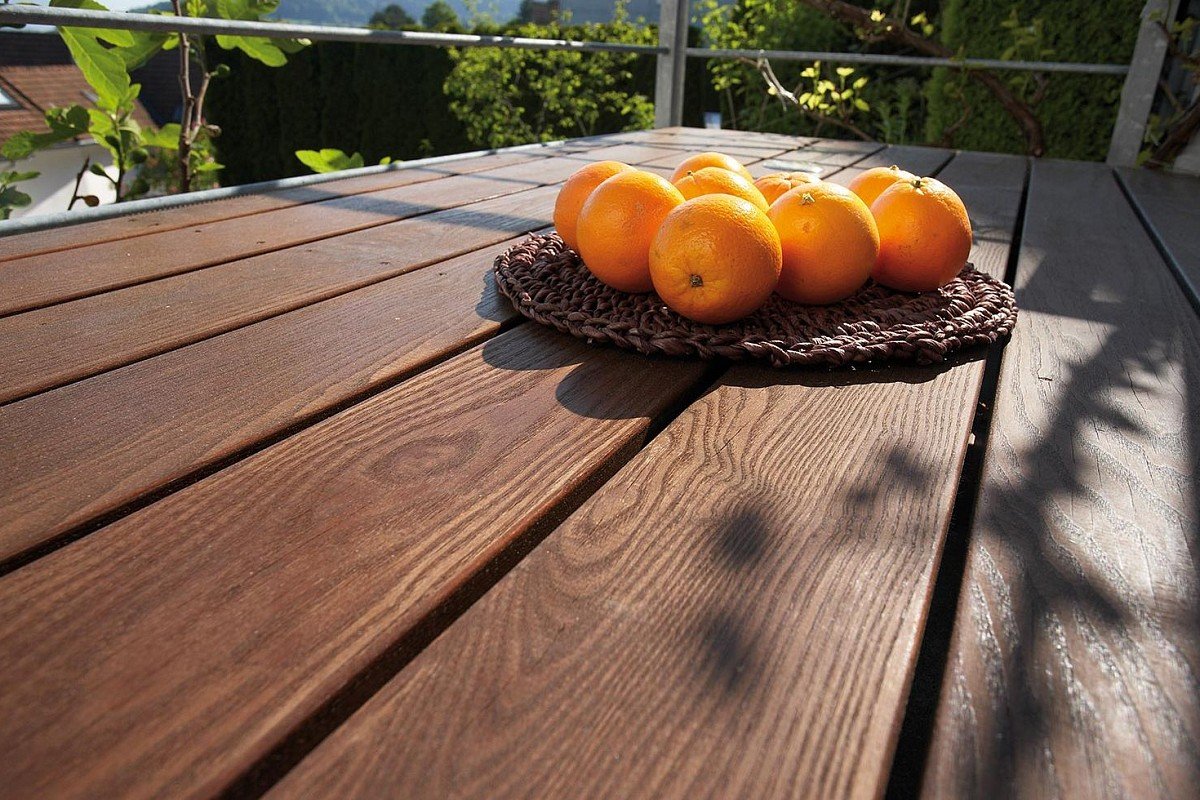
Thermally modified wood can follow one of two appearance paths. To retain the original tone, the surface should be cleaned and coated or recoated with a compatible UV-protective oil as required by exposure. Westwood notes that directly exposed surfaces may need attention annually, although orientation, climate, overhangs, and exposure can lengthen or shorten that interval. The alternative is to allow the wood to weather naturally. Ultraviolet exposure will gradually shift the surface toward silver-gray, but that visual change does not mean the thermal modification has stopped performing.
Fire Performance
Fire performance is determined by the assembly, occupancy, height, location, and any wildland-urban interface provisions, not by the material category alone.
Fiber cement is noncombustible, which helps when noncombustible cladding is required, though the tested wall, attachment, sheathing, and joints still must be confirmed.
Thermally modified wood is combustible unless a specific product and assembly (and aftermarket applications) have current test reports or listings that indicate otherwise.
Vinyl is also combustible, and code-compliant vinyl assemblies are common in permitted residential work.
In WUI zones, the authority having jurisdiction will accept only listed and tested products, which is why programs such as the California Office of the State Fire Marshal Building Materials Listing exist. Do not compare the generic combustibility of one material with the tested assembly of another. Compare listings and confirm the path with the authority having jurisdiction.
Sustainability and Sourcing
Sustainability is more than being 'green'; it also involves evaluating sourcing, transportation, repairability, service life, verified environmental documentation, and end-of-life options.
Wood is a natural and renewable resource. Trees absorb carbon dioxide as they grow, and carbon remains stored in wood products throughout their service life. Material circularity depends on forest management, manufacturing energy, transportation, durability, and end-of-life handling, which is why responsible sourcing and clear product data matter.
Look for thermally modified wood products made from domestically sourced lumber that is steam-treated without added chemicals or preservatives. Westwood holds FSC Chain of Custody certification, which verifies that an organization has systems to track eligible forest-based material through its operations; however, an individual order should be represented as FSC certified only when it is supplied and documented with the appropriate FSC claim.
Fiber cement offers long-term durability and a long service life with regular maintenance, which can reduce the need for replacement. However, it carries the impacts of cement production, reinforcing fibers, manufacturing energy, coatings, and disposal.
Vinyl is lightweight, which can reduce transportation and handling burdens, and it requires no repainting. It is derived largely from fossil and mineral feedstocks, and access to recycling varies. Clean manufacturing scrap is more readily recycled than mixed demolition waste, making local recovery infrastructure an important part of any end-of-life claim.
Material comparison, at a glance
|
Thermally modified wood |
Fiber cement |
Vinyl |
|
|
Reach for it when |
The architecture depends on natural material, grain, and the option to weather |
The wall needs a uniform painted face, or a noncombustible cladding in a verified assembly. |
First cost leads and the cladding is not asked to carry the design |
|
Aesthetic |
Authentic grain and board-to-board variation |
Uniform painted or prefinished surface |
Consistent manufactured color and profile |
|
On the jobsite |
Standard woodworking tools; sharp carbide, edge distances, predrilling; field customizable |
Heavy to stage; cutting triggers OSHA silica controls |
Light and quick; must be fastened to move |
|
Maintenance cycle |
Keep the tone with UV oil, or let it silver and skip the color cycle |
Keep a paint system alive; recoat as it ages |
Wash; repainting is off the table |
|
Repair path |
Boards removed, replaced, sanded, refinished, or remilled |
Boards replaceable; paint matching can widen the scope |
Panels replaceable only while profile and color are still stocked |
|
First cost |
Premium |
Midrange to premium |
Generally lowest |
The strongest specs are not built around a universal winner. They are built around clear priorities and honest expectations.
Frequently asked questions
Is thermally modified wood still real wood?
Yes. It begins as natural lumber. Heat and steam alter how the wood handles moisture and improve its resistance to fungal decay, but the material remains wood throughout the board.
Is thermally modified wood chemically treated?
No chemicals or preservatives are added during thermal modification. Factory-applied oils or project finishes are separate products and should be reviewed for the selected spec.
Does thermally modified wood have to be oiled?
Only to hold the original warm tone. Without a UV-protective finish, the surface gradually weathers to a silver-gray color, which is an aesthetic change rather than a failure.
Does thermally modified wood work in wet or humid climates?
Reduced moisture uptake and improved decay resistance make it a viable choice over traditional wood, but it is still wood. Follow the manufacturer's clearances and use corrosion-resistant fasteners rated for exterior use.
Which material lasts the longest?
There is no single universal answer. All three can provide decades of service when the wall is designed correctly, the product is installed correctly, and maintenance matches the material and the exposure.
Choosing a suitable material for your siding project
Exterior siding is rarely selected based on a single characteristic.
The best projects balance aesthetics with constructability, durability with maintenance, and initial cost with long-term value.
Thermally modified wood, fiber cement, and vinyl each address different design challenges. Understanding those differences early helps architects and builders specify materials that continue performing long after construction is complete.
The right choice is the one that aligns with the building's priorities. None of the three eliminates its trade-offs. Wood simply keeps its trade-offs visible, which is usually the point.
See the grain in person. Request a ThermA Siding sample or earn AIA credit with our CEU course on specifying thermally modified wood.

Leave a comment
This site is protected by hCaptcha and the hCaptcha Privacy Policy and Terms of Service apply.