
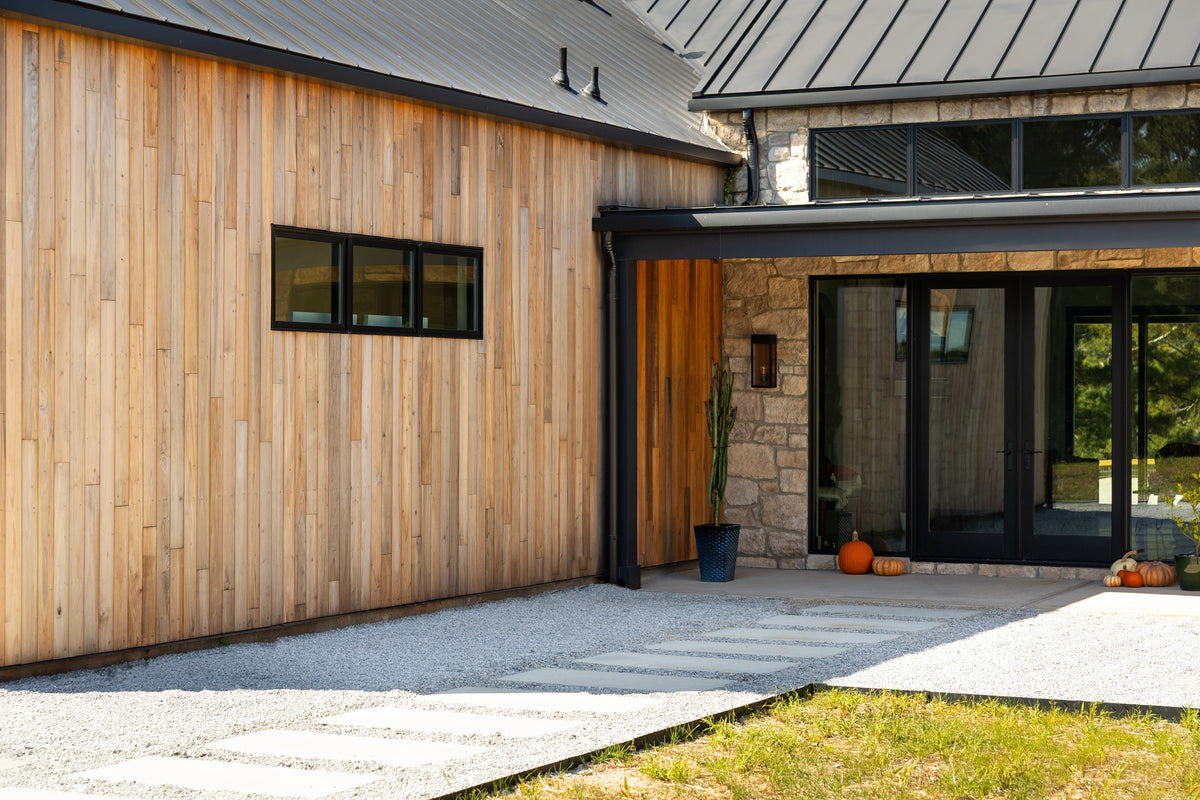
Architects have never selected materials based on appearance alone. Today, the questions behind a specification are more demanding. Where did the material come from? What is it made of? How will it weather? Can it be repaired? What happens at the end of its service life? Will it still support the design years in the future?
This thinking extends well beyond a single product category. The AIA Architecture & Design Materials Pledge asks firms to consider human health, climate health, ecosystem health, social health and equity, and circularity when choosing materials. AIA's latest report notes that more than 325 firms have signed the pledge. Material selection is being measured against a broader set of goals than just schedule and budget.
Composite products still have their place, for example, if an architect is striving for consistency, low routine maintenance, and efficient installation. But if a project calls for warmth, texture, natural variation, and a clear story about sourcing and aging, architects are leaning towards specifying real wood. Thermally modified wood makes that choice easier by addressing some of the performance concerns that have led projects toward manufactured alternatives.
You can't manufacture authenticity
Composite materials can reproduce wood-like color and grain with impressive consistency. What they cannot reproduce is the material itself. Real wood has depth, variation, and a tactile quality that changes with the light, giving an elevation or outdoor space a distinct character. No two boards are exactly alike—and that variation is often part of the design, not a defect to hide.
That distinction matters when the goal is a stronger connection to nature rather than another surface that imitates it. WoodWorks notes that wood can contribute to biophilic design and describes it as renewable, durable, adaptable, and reusable. In practical design terms, real wood brings warmth and a natural connection to the surrounding landscape.

The material story is part of the design
Materials are facing greater scrutiny from owners, sustainability teams, and project stakeholders. Broad terms such as "green" and "eco-friendly" are no longer enough. Specifiers want to understand raw materials, manufacturing processes, transportation, available environmental documentation, service life, and end-of-life options.
Wood begins as a renewable resource, but building in today's environment means responsible specification, including forest management, product claims, manufacturing, coatings, durability, and transportation. Environmental Product Declarations offer project teams a standardized way to review lifecycle impacts. The expanding number of wood-product EPDs is one sign of the industry's demand for clearer material data.
Westwood's approach is straightforward: more than 95% of our lumber comes from U.S. forests, and we perform thermal modification, milling, profiling, quality control, and finishing under one roof in Macon, Georgia. We modify the wood with heat and steam rather than added chemical preservatives. For project teams that want a shorter supply chain and a clear understanding of who makes the material, those details matter.

Thermal modification offers enhanced performance
Traditional wood expands and contracts as it absorbs and releases moisture. That movement contributes to swelling, shrinking, cupping, twisting, and stress on the finish. Composite products have an advantage here and are often selected to reduce those concerns. Thermal modification makes a compelling challenge to the norm.
During thermal modification, heat and steam alter how wood interacts with moisture. USDA Forest Products Laboratory research has shown that heat treatment reduces moisture absorption, improves dimensional stability, and increases decay resistance. During the process, no chemicals are added, benefiting designers seeking a natural wood product with enhanced performance.
Thermally modified wood, like any material used for exterior applications, is not maintenance-free. Products cannot be treated as interchangeable across species, exposures, or assemblies. It is still wood and must be properly detailed, installed, and maintained. When the manufacturer understands the species, controls the process, and matches the product to the application, architects can specify real wood with greater confidence for siding, decking, soffits, ceilings, and other architectural surfaces.
Wood can be designed to age well
Manufactured surfaces are typically designed to maintain a consistent original appearance. When damage, fading, or discontinued profiles disrupt that consistency, matching an older installation can be difficult. Wood offers another approach.
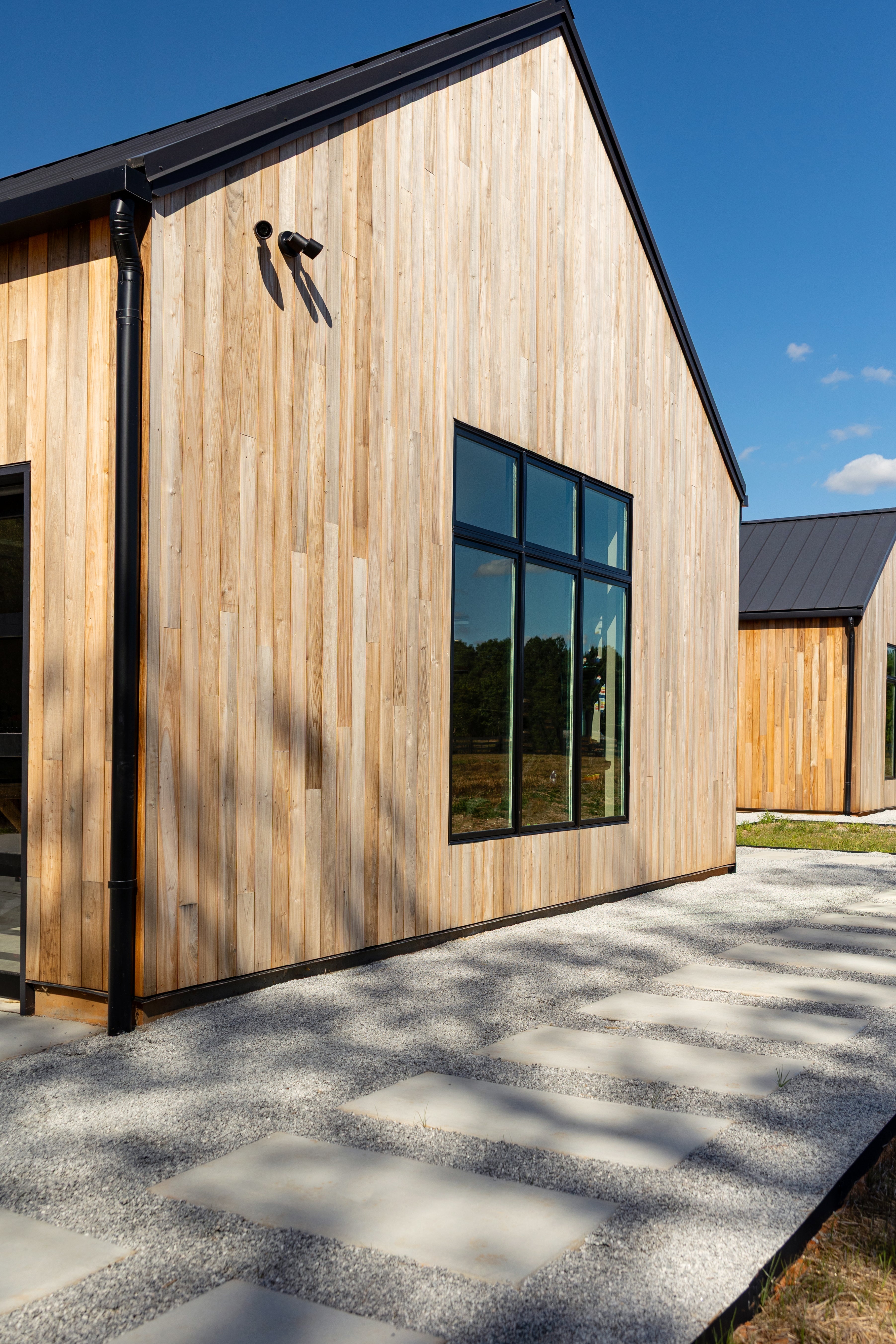
Finishes, typically a wood oil, help retain the warm, original tone of thermally modified wood, or allow the surface to weather into a silver-gray patina. That change is gradual and expected, but it does not mean the thermal modification within the board has stopped working. Thermal modification permanently enhances the wood’s properties. Architects can design for a maintained color or choose a material that evolves with the building.
Wood also offers practical repair options. Depending on the profile and installation, individual boards can often be removed, replaced, sanded, refinished, or remilled. Maintenance does not go away, but it may be handled locally rather than across an entire surface—an important consideration for owners planning beyond opening day.
Design aesthetics still matter
Projects require various details that determine the design at full scale. Wood is familiar to millworkers and contractors and can be profiled or adapted to carry a consistent design across siding, soffits, ceilings, screens, decking, and trim.
That flexibility has value only when the manufacturer can deliver predictable material. At Westwood, the thermal modification team works alongside the teams responsible for milling, profiling, finishing, and quality control. Species-specific experience and process control make custom solutions more dependable.
Domestic manufacturing offers predictability
A product can meet the design intent and still pose a risk to the project if the materials must pass through a long, uncertain supply chain. Recent disruptions have made that risk challenging.
While domestic sourcing and manufacturing do not eliminate delays, they can improve transparency, communication, and response time. For architects, that means the specification can be maintained. Where the product is made, who can answer technical questions, and whether the manufacturer can support the project after the initial order is also essential in today’s economic climate.
Specify natural wood with confidence
Natural wood may not be the answer for every project, but as architects ask more of the material they specify, it now delivers with confidence. Thermal modification improves stability and decay resistance without additives. It offers authentic grain and is a renewable resource. It supports biophilic design, can be repaired and refinished, and ages in ways that reinforce the design intent - real wood.
For projects where the material is expected to help define the architecture, that combination is difficult to replace.
See the difference real wood makes
Request a ThermA Siding™ or ThermA Decking™ sample, or contact Westwood Millworks to discuss species, profiles, finishing, and project requirements.

Leave a comment
This site is protected by hCaptcha and the hCaptcha Privacy Policy and Terms of Service apply.