
What twenty years and more than a dozen species have taught us about what lasts
In Part 1, I argued that thermal modification is a manufacturing discipline and that the kiln is only one part of the process. I noted that each species reacts differently to heat and steam, and that outcomes vary with grading and dimensional specifications. In Part 2, we'll explore what happens when it shifts to different species.
For nearly twenty years, Westwood has run more than a dozen species through our kilns, each with its own process and documentation. Some performed successfully while others failed. The species we modify today — Poplar, Ash, Southern Yellow Pine, and Western Hemlock — are our primary ones; they are the ones that earned their place based on performance and our ability to produce them consistently and repeatably. Real capability isn't how many species you can source; it’s about knowing what the species can do today and what they'll do ten and twenty years into a demanding application.
Each of our four primary species reacts differently to heat and steam. For example, the schedule that produces a clean, stable Poplar board won't deliver the same results with Pine. Distinguishing these nuances—and learning them over years of production—can't be shortcut, bought, or imported.
The same kiln won’t run any two species the same way. If it could, this would be a much easier business.
Why Species Is a Process Question, Not Just a Sourcing One
To understand why process matters, remember that thermal modification uses heat and steam to alter wood. It drives out moisture, breaks down sugars — the hemicelluloses that decay organisms feed on — and stabilizes wood against swelling or shrinking. Remove them, and the board stays dimensionally stable and resists rot, all without added chemicals.
For every species that enters the kiln, there are differences in density, grain structure, resin content, and moisture behavior. These inherent properties define how the wood responds to the process. So, the question was never really “what species can we get our hands on?” It is “do we understand how this species behaves from green board to finished profile, and can we reproduce that result every time?” There's no shortcut to that understanding. It accrues over time.
Poplar: Even-Tempered and Expected
Poplar is a low-density, ‘softer’ hardwood with a fine, even texture and little resin. It is forgiving to work with and maintains a clean profile, which makes it ideal for siding, soffits, and outdoor furniture.
The process for Poplar is more about restraint. Because it is lighter and less dense, it is important to take a little extra care during the modification process. Run it well, and Poplar becomes a stable, rot-resistant board with a beautiful finish. Run it like a dense hardwood, and you’ll see a poor result.
On the Modern Georgia Farmhouse project, the homeowner requested our thermally modified Poplar siding, installed unfinished. The intent: let it weather naturally to a soft silver patina. ThermA Poplar offers a smooth grain, modern appeal, and the durability expected of thermally modified Poplar.

Ash: Strength and Beauty
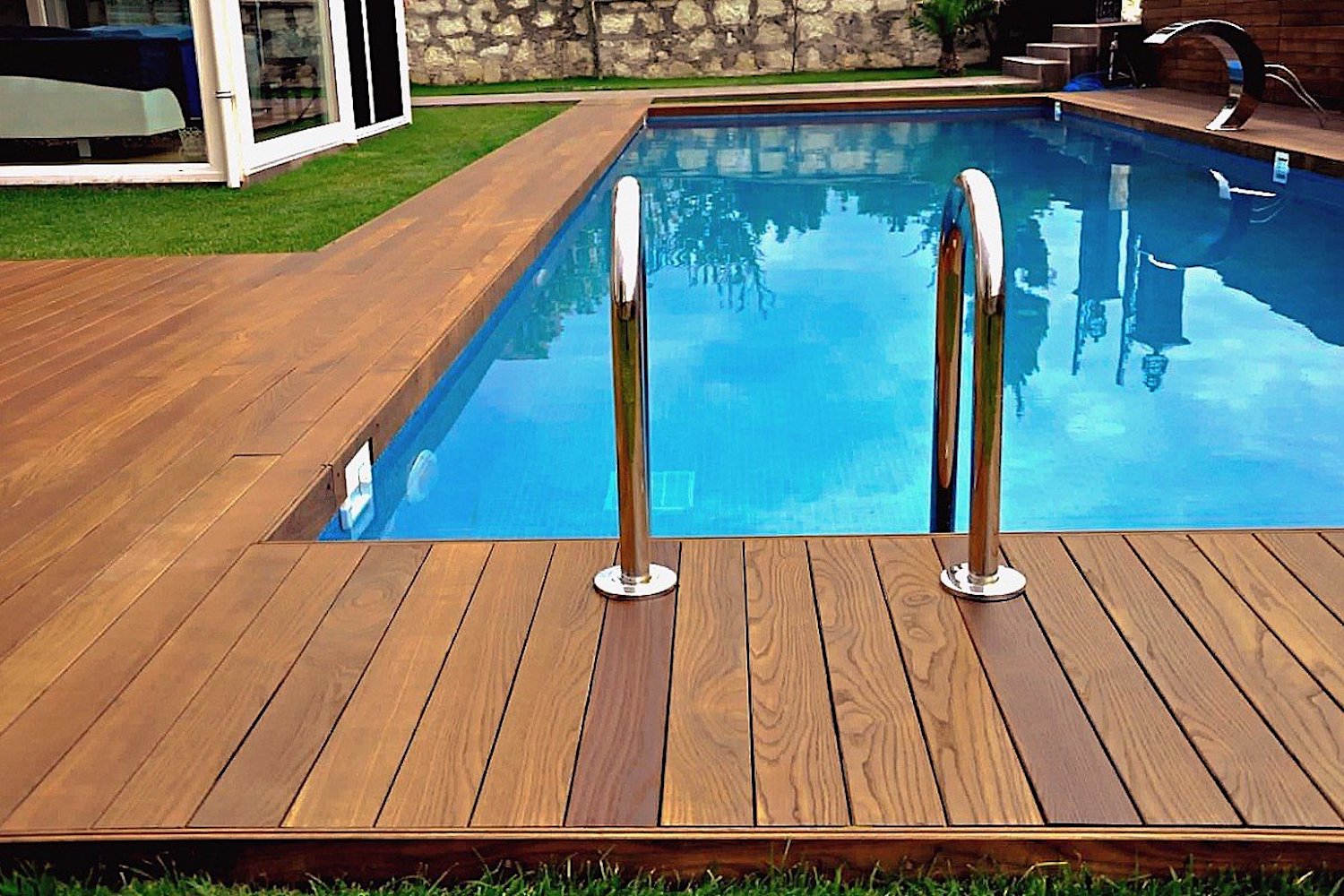
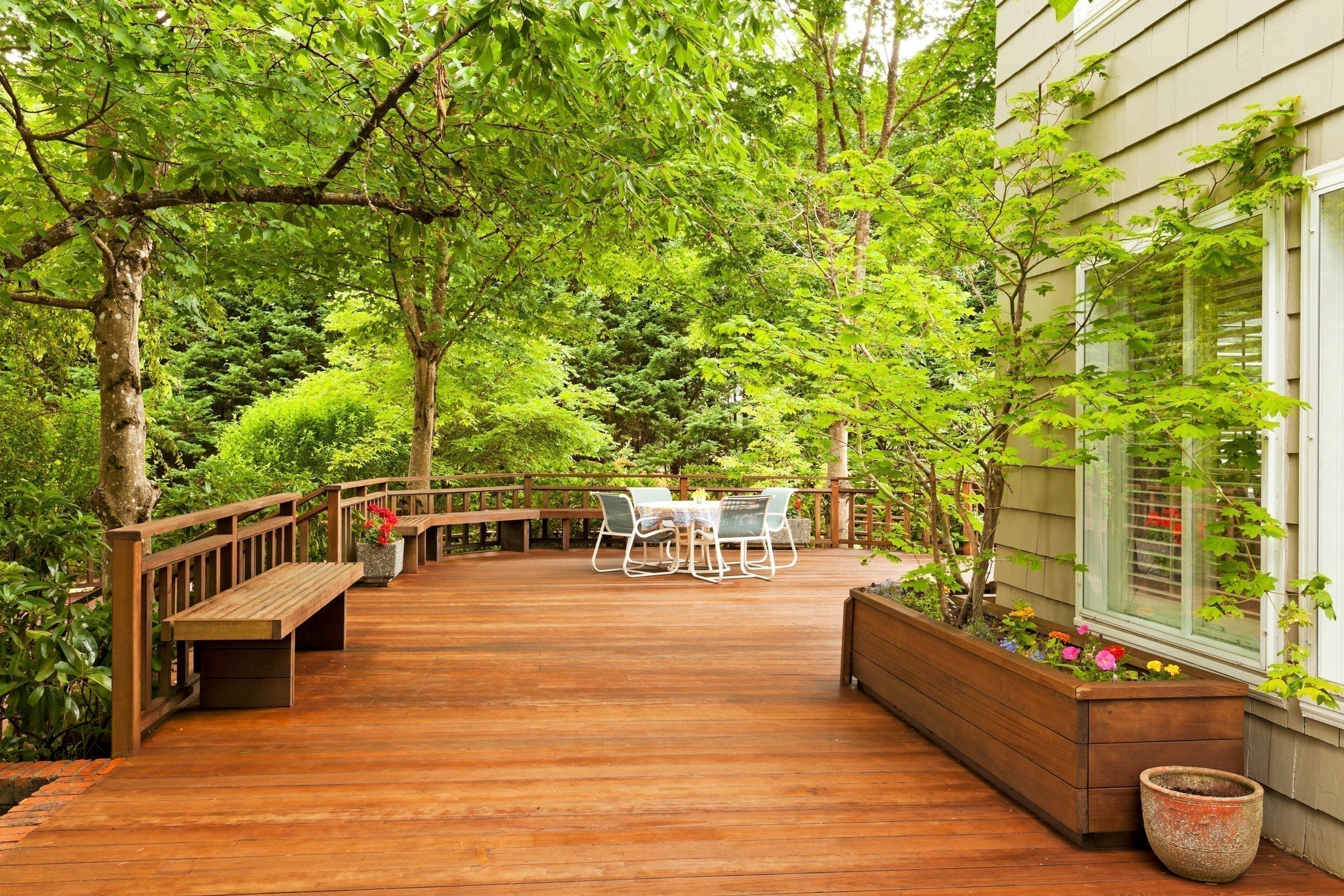
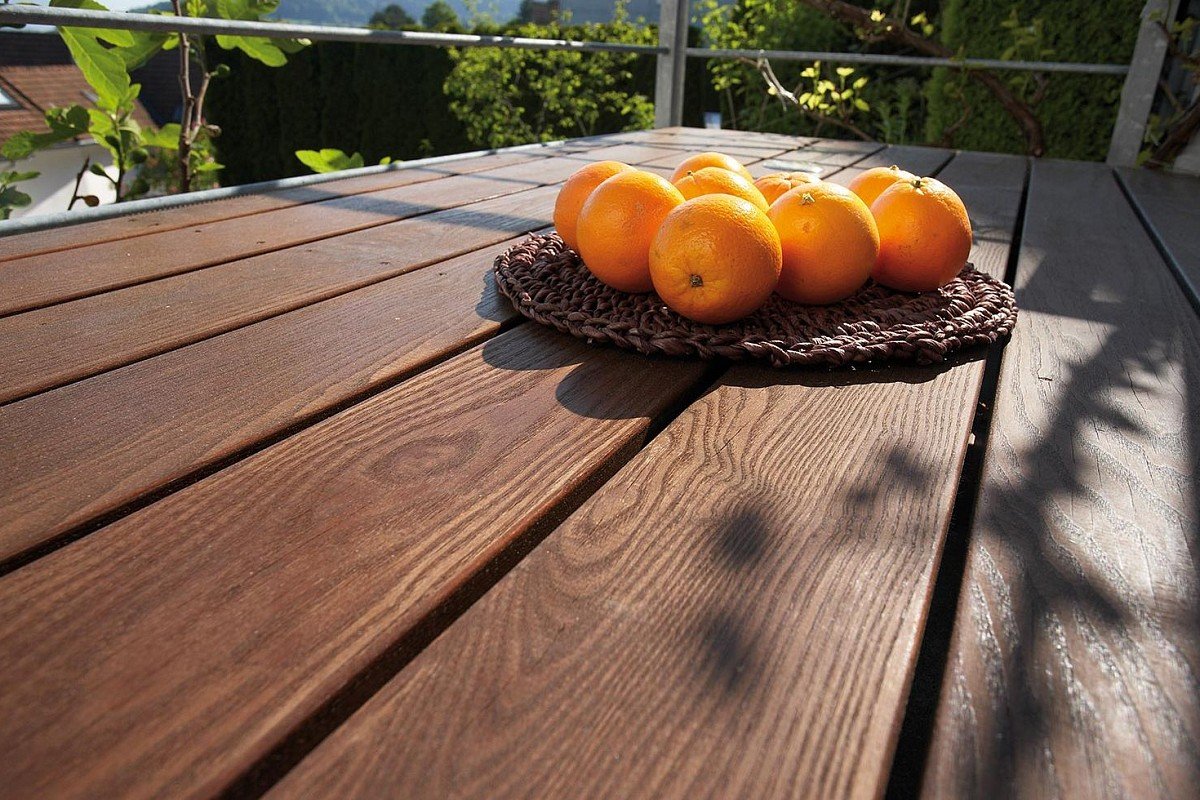
Ash is a dense, ring-porous hardwood with large early-season pores. It has an excellent strength-to-weight ratio. Thermally modified, it gains rich color, hardness, and stability, making it a top choice for decking. That’s why Ash is one of our signature products.
Running Ash well means managing open pores and grain transitions, so each board comes out stable and without surface checks.
There's also a sustainability story here that's easy to miss. North American Ash has been hard-hit by the emerald ash borer, leading to widespread harvesting. Thermal modification turns a threatened domestic hardwood into a premium, durable product with a 20-year warranty, all sourced and manufactured right here in the U.S. This is the best use of the species, given its situation.

Southern Yellow Pine: Highly Durable Workhorse
Southern Yellow Pine is a dense, resinous softwood with a sharp contrast between soft early growth and hard, aged bands. Resin and density make Pine unforgiving if the process isn’t right.
The thermal modification process stabilizes the natural resin in SYP and evens it out. It is a renewable, domestic softwood that outperforms its cost in exterior uses. However, if modified incorrectly, Pine can pitch, check, or be modified unevenly.

Western Hemlock: A Lighter Touch
We finish Western Hemlock to a lighter standard tone, not just for style. Hemlock is a low-density softwood with fine, even grain and little resin. Its pale color takes a gentler process and finishes lighter.
It’s easy to over-modify Hemlock, but it is a wood that needs little change. Handled correctly, it mills cleanly, stays stable, and looks soft and even, ideal for light palettes.
No Universal Process
Each species we run requires its distinct processes, refined over the years and many runs. All are domestically sourced, modified, and milled under one roof in Macon, Georgia.
We’re obviously not in the numbers game. Simply sourcing more species doesn’t guarantee a stable, defect-free board. It comes down to process knowledge and consistency. We’d rather run a focused set of species we know cold than a long list we only half understand.
Anybody can source a species. What’s been built at Westwood over twenty years is knowing exactly what each one does before it goes in the kiln and which ones are worth running at all.
In Part 3, I'll examine where this is heading and why operational control across the process will matter more than ever for builders, specifiers, and dealers making long-term decisions.

Peyton Turner is President of Westwood Millworks, a Macon, Georgia manufacturer of thermally modified wood. Since 2007, the company has run proprietary kiln technology it designed and built in-house, turning North American hardwoods and softwoods into its ThermA Decking™ and ThermA Siding™ lines. Inspired by Nature. Perfected in Georgia.

Leave a comment
This site is protected by hCaptcha and the hCaptcha Privacy Policy and Terms of Service apply.