
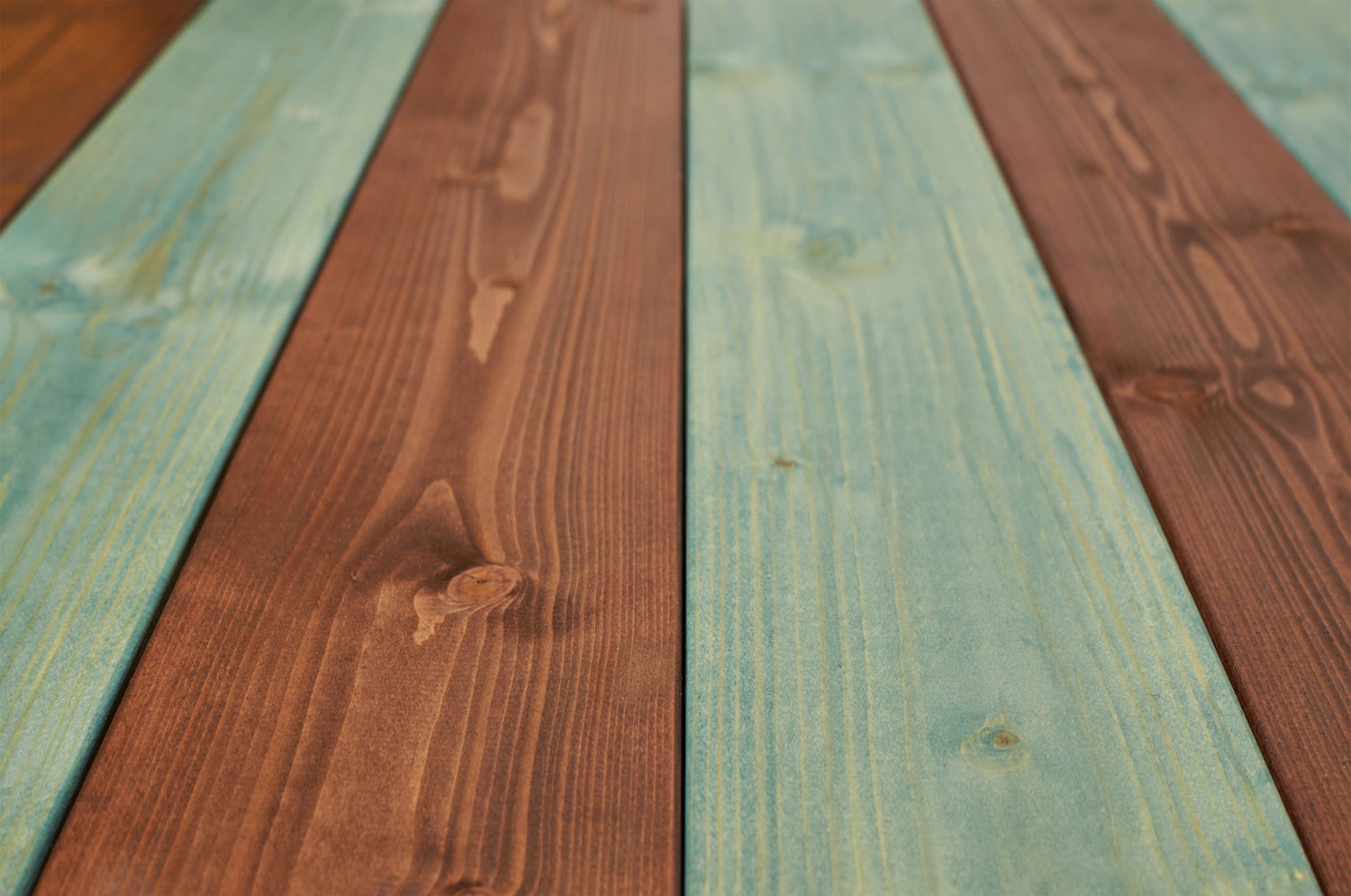
If you’re planning a new deck, you’ve likely considered pressure-treated lumber. It’s long been the standard for decking—affordable, available, and familiar. But it’s not the only choice, and for many homeowners, it’s no longer the best.
Westwood Millworks’ ThermA Decking is different. Through the thermal modification process, ThermA Decking achieves enhanced durability. Thermal modification uses heat and steam, not chemicals. Here’s how the two compare across the factors that matter most.
How Each Material Is Made
Pressure-Treated (PT)
Southern yellow pine is commonly pressure-treated with chemical preservatives. Chromated copper arsenate (CCA) was once standard. Today, most PT lumber uses alkaline copper quaternary (ACQ) or copper azole (CA)—safer, but still copper-based.

Thermally Modified ThermA Decking
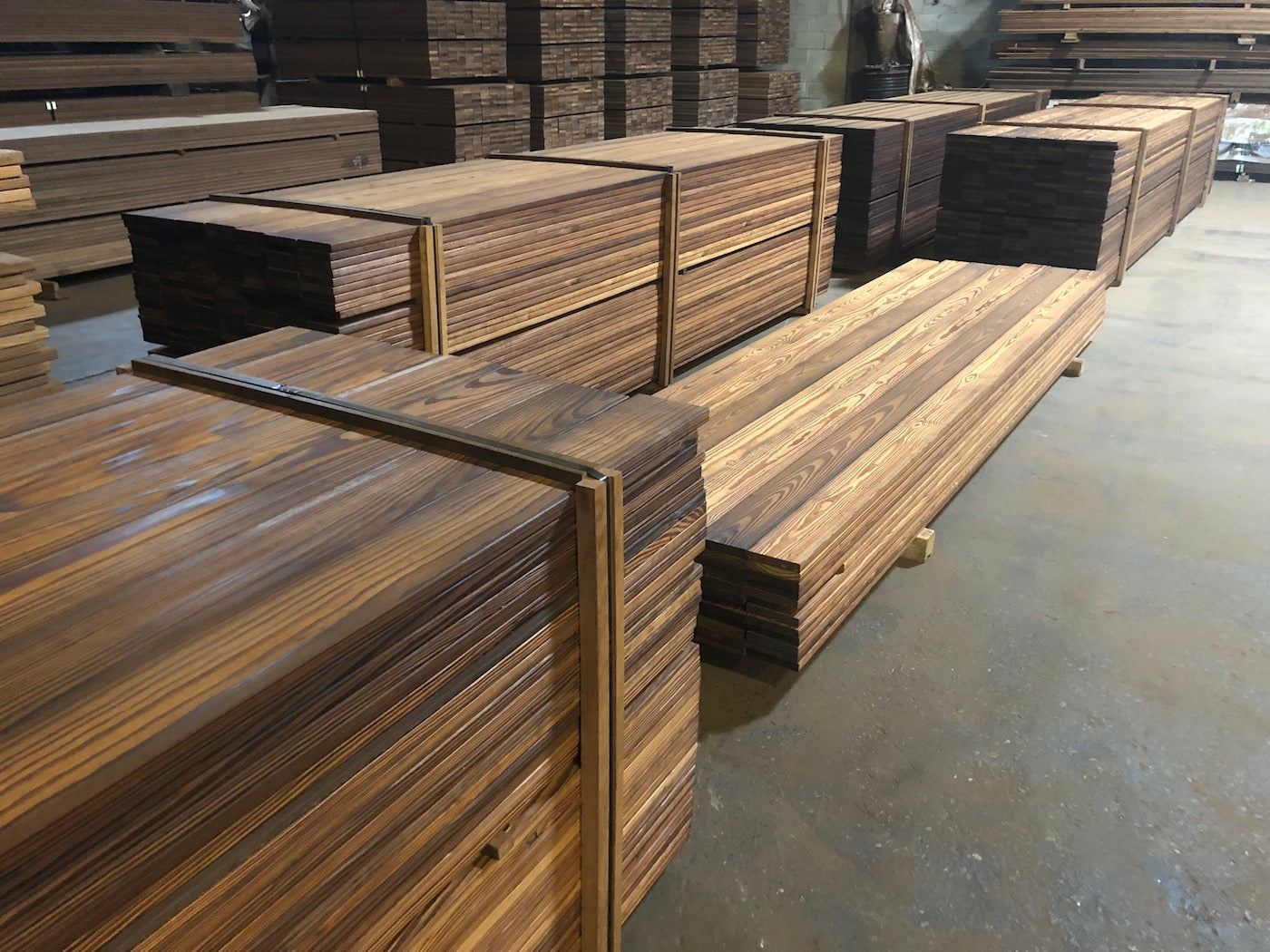
ThermA Decking uses premium ash, pine, or hemlock, heated with only steam—no chemicals—to around 400°F. This alters the wood at a molecular level, removing sugars that attract rot and insects, and lowers its moisture to 4-6%.

Safety: Chemicals vs. No Chemicals
This is where the comparison becomes straightforward. Pressure-treated lumber contains copper-based preservatives. While today’s formulations are considered safe for residential use, there are practical considerations worth knowing:
- Food gardens or edible plants should not come in direct contact with PT lumber
- Sawdust and off-cuts require careful disposal — burning PT lumber is a health hazard
- Precautions, like wearing gloves and a dust mask, are recommended when cutting or sanding
- Children’s play areas have specific guidelines around PT lumber use
ThermA Decking contains no biocides, preservatives, or any other added chemicals. It’s a 100% sustainable product. The thermal modification process is the treatment of wood; no byproducts to worry about.
Durability and Dimensional Stability
While PT lumber resists rot and insects well when properly maintained, it is known for dimensional instability. Freshly treated lumber contains significant moisture, and as it dries — sometimes long after installation, it commonly warps, twists, cups, and checks. Boards that looked straight at the lumberyard often look very different six months after installation.
The ThermA Decking modification process reduces moisture content to 2–4% before the board even arrives at your project. The result is dramatically reduced warping, splitting, and swelling, and a product that arrives factory-sealed on all sides.
Maintenance Considerations
Pressure-treated decks require regular, ongoing maintenance, and most manufacturers recommend sealing or staining within the first year and then re-treating every 1–2 years thereafter, depending on climate exposure. Skipping maintenance accelerates checking and graying and shortens the deck’s effective lifespan. What is included in the initial short-term construction costs may lead to higher long-term maintenance costs.
ThermA Decking is pre-oiled on all four sides at the factory. Ongoing maintenance is minimal: either a periodic UV-protective finish to preserve the factory color, or letting it silver naturally over time. Many homeowners find this one of the most compelling differences.
Fire Rating
ThermA Decking carries a Class B fire rating, which is a big plus for homeowners in fire-prone regions or those subject to local code requirements. Standard pressure-treated lumber does not carry a Class B rating unless treated further.
Environmental Responsibility
While both options use wood from managed forests, they differ in environmental impact. Copper-based treatments used for PT lumber raise concerns about leaching into soil and water over time. Westwood Millworks’ ThermA Decking checks the boxes: no chemicals are used because the modification process relies entirely on heat and steam — no hazardous byproducts — and the finished product is fully recyclable. Additionally, the wood is responsibly sourced domestically.
The Bottom Line
Pressure-treated lumber remains a capable, cost-effective decking option. If you’re working with a tight budget or a short timeline, it’s a proven material that most contractors are familiar with.
But if you’re building for the long term, especially if low-maintenance, chemical-free construction, dimensional stability, or a higher fire rating matter to your project, ThermA Decking is worth a serious look. It’s real wood, built to outlast the alternatives.
ThermA Decking specs at a glance:
- Species: Premium clear-grade ash, pine, or hemlock
- Thickness: 15/16″ — Width: 5.5″ — Lengths: 5– 20’ random
- Factory-sealed on all four sides
- Class B Fire Rating
- 20-Year Durability Guarantee
- No chemicals, 100% green
Ready to talk decking? Contact the team at Westwood Millworks to learn more about ThermA Decking or to request samples. We’re happy to walk you through your options and help you find the right fit for your project.


Leave a comment
This site is protected by hCaptcha and the hCaptcha Privacy Policy and Terms of Service apply.